
Skip to content
  • Circularity platform
  • Solutions
    Our services
    Sectors
    Segments
  • Courses
  • Information
  • Case History

The new way to produce and consume

The circular economy is a model of production and consumption that rethinks the way we use resources to ensure sustainable growth over time.

The future is circular

The circular economy overturns the take → make → use → dispose model: what is waste today becomes a resource for a new production cycle.


This means putting an end to value loss along the supply chain and building a system that reduces raw material consumption, turns waste into opportunity, cuts dependence on scarce and costly resources, and minimizes environmental impact.
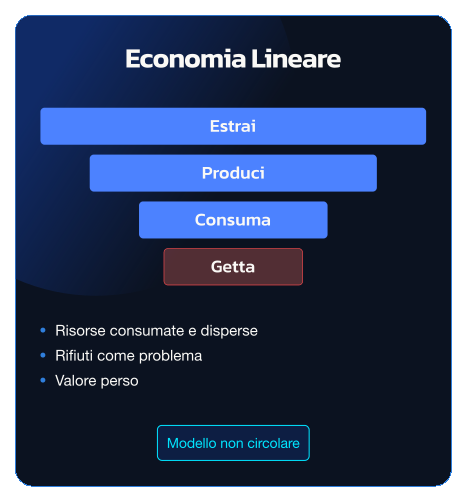
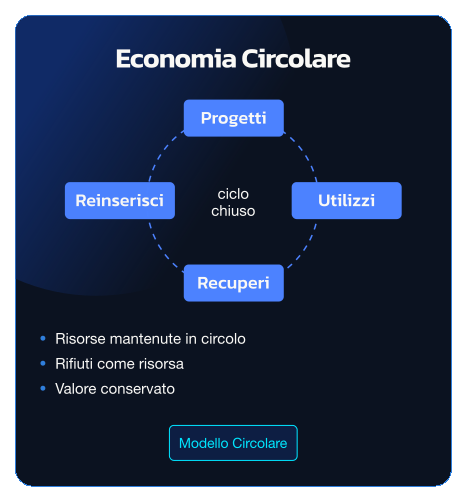
Circular Economy Dashboard 1
Circular Economy Dashboard 2

The principles of the circular economy

The EU has made the circular economy a cornerstone through the Green Deal and the Circular Economy Action Plan, in order to accelerate the transition toward a more efficient, low-emission system.


These principles guide companies and territories toward regenerative production models:

1

Eco-design

Design with the entire life cycle in mind

2

Functional economy

Services instead of products

3

Reuse and repair

Extend the life of products

4

Riciclo

Turn waste into raw materials

5

Industrial symbiosis

Wood processing scraps become raw material for acoustic panels; plastic residues become components for new products

Areas of application

We translate analysis into concrete services, designed to simplify the management of your company's strategy, materials and environmental impacts.

The circular economy doesn't concern a single area, but the entire production chain.

It is already applied in several sectors:

Valorisation of organic waste along the entire supply chain, from production to processing.

Recovery and reuse of materials to reduce the impact of construction sites and demolitions.
New models of recycling and reintroduction of materials into production cycles.
Reduction of waste and efficient management of food surpluses.
Reuse of fibres and development of regenerated materials to extend the lifecycle of products.
Valorisation of waste, packaging and ESG data across the entire supply chain for more efficient and competitive models.
Sustainable management of ingredients, packaging and supply chain with focus on compliance, traceability and verifiable claims
Optimisation of processes, materials and production resources to reduce impacts, increase efficiency and generate new value

We turn environmental impact into opportunity

In a context of climate crisis and raw material scarcity, it is not only a sustainable choice, but a strategic one.
Adopting a circular model means:

eco-circolare-1
Reduce environmental impact
eco-circolare-2
Decrease the consumption of natural resources
eco-circolare-3
Create new economic opportunities
eco-circolare-4
Generate local employment
eco-circolare-5
Make companies more resilient
Contact us

Shall we begin?

Write to us and let's figure out together where to start.