Circular economy
€ 638
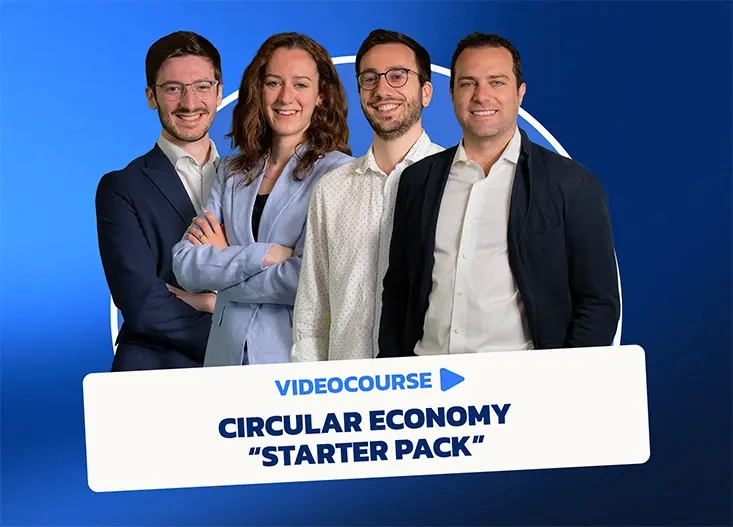
VAT includedThe “Circular Economy” course aims to foster a proper understanding of how the circular economy can be applied within a business, starting with the definition of the strategic approach and extending through to operational implementation via product design, the acquisition of key skills, the development of specific technologies, and the measurement of circularity at both company and product level.
Circular economy
€ 638
Get the courseCircular Economy
The training course is designed for Project Managers with prior experience in the circular economy and sustainability sector, as well as for recent graduates who want to gain concrete knowledge and tools on circularity.
The course is structured into 8 modules, video-recorded and available via streaming on the Circularity Platform.
The entire course or individual modules can be purchased by credit card or bank transfer and followed via streaming on our platform.
Once purchased, they remain valid for 30 days.
At the end of each module you can take a quiz to test your level of learning.
At the end of the course, a personalized certificate of participation will be issued.
The course price is VAT included.
Purchase by credit card or bank transfer
Assessment quiz available at the end of the course
Watch the first video of Module 1 as a free preview
“Origins and history of the Circular Economy”
Course contents:
“Circular Economy”
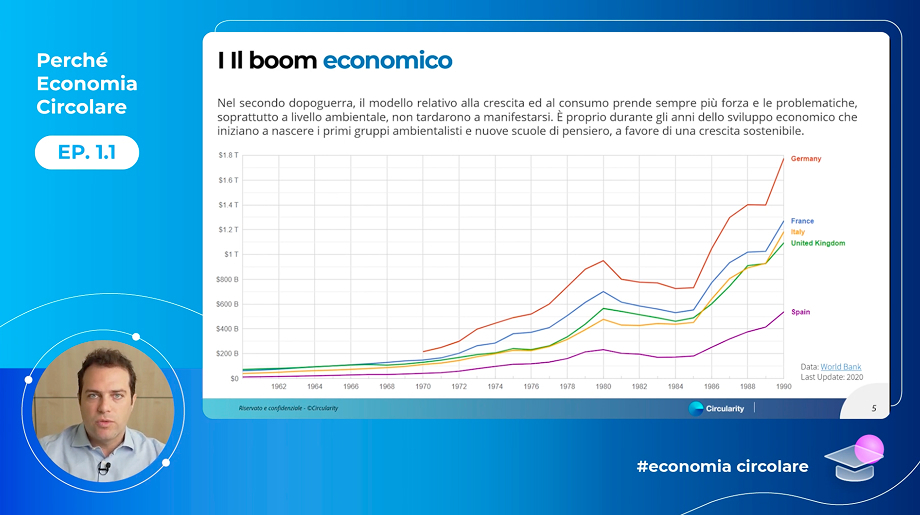
This module explores the origins and history of the Circular Economy and the theories that inspired this economic model. It then focuses on the current global scenario, highlighting the importance of adopting sustainable practices in the consumption of resources, going on to assess the possible scenarios in the construction of a more circular and sustainable future.
1.1 Origins and history of the Circular Economy
The Circular Economy is not a completely new economic model, but draws inspiration from academic theories such as bio-economy, industrial ecology, the cradle to cradle theory and the blue economy. This module provides an in-depth perspective on the genesis of the Circular Economy, creating a solid foundation for understanding its current and future impact on the global economic landscape.
1.2 The current global scenario
Today's society and its economic model are pushing our planet to the brink of collapse, preventing sustainable development for future generations. There are a series of interconnected factors that require continuous monitoring and improvement to understand that we have reached the moment for necessary change. This module explores statistics and trends of our current production model.
1.3 Resource consumption
Natural resources provide the basis for goods, services and infrastructure that make up our current socio-economic systems. This module explores the main causes that are leading to excessive resource consumption and an unsustainable future, in order to understand how a transition to a more circular model is necessary.
1.4 Future scenarios
New regulations, such as the measure banning the sale of vehicles with combustion engines from 2035 in favor of electric cars, or the concentration of critical materials in a few countries, are forcing various industrial sectors to rethink their business model, showing how the Circular Economy could be the development model of the future. We explore the possible future scenarios that lead to a necessary circular change.
This module covers the basic theory governing this business model. It highlights the link with sustainability and the dimensions of application (Macro, Meso and Micro), going on to explore its founding principles such as Eco/Circular-Design, reuse, repair and recycling.
2.1 What the Circular Economy is (and isn't)
There are several definitions of the Circular Economy, all of which share common factors aimed at reducing waste and inefficiency and promoting sustainability, decoupling economic growth from resource consumption. We start from standard theory and move on to a clear definition of what the Circular Economy is.
2.2 The links with sustainability
Doing Circular Economy does not equate to doing Sustainability, but putting its principles into practice is essential to contribute to achieving the Sustainable Development goals of future society. We explore how, in the United Nations 2030 Agenda, Goal 12 groups together the Circular Economy targets to be achieved.
2.3 The theory of the Circular Economy (Eco-design, reuse, repair, recycling)
The principles of the Circular Economy aim to rethink the product from the design stage, seeking to facilitate the reduction, reuse, repair and recycling of materials to extend their life cycle, while reducing the use of virgin raw materials and waste production. The basic theory of the Circular Economy and its founding principles are explained.
2.4 Macro and Micro
The Circular Economy is a business model that can be used in various industrial sectors and at different ''dimensions''. We explore Micro Circular Economy: applied within a single company or a single industrial process; Meso Circular Economy: applied within an industrial supply chain with multiple companies involved, or in a specific territory (city, region), industrial districts; Macro Circular Economy: applied to an entire country/nation or continent.
This module explains how the Circular Economy is regulated by European directives and regulations that must be transposed into the laws of member countries. Italy has long been a benchmark for circularity, and we explore how the new European "rules" have been incorporated into the Italian legislative framework.
3.1 EU regulations for the Circular Economy
Europe has chosen the Circular Economy as a driver of development for its industry. We explain how, in 2020, the European Commission launched the new Circular Economy Action Plan, a central tool for the European Green Deal to contribute significantly to achieving climate neutrality.
3.2 National regulations on the Circular Economy
Italy is one of the European and global pioneers when it comes to the Circular Economy, and is already well oriented toward circularity. In 2022, the National Circular Economy Strategy was launched, paving the way for more efficient use of materials and energy, more goods and services with less consumption of materials and energy, all strategic factors for the Italy of tomorrow.
3.3 The SEC: National Circular Economy Strategy
The EU has issued a series of directives aimed at facilitating waste management with a view to achieving Circular Economy objectives. We explain the implementation of EU directives, which took place through four legislative decrees directly amending the key national provisions on waste. The main topics modified or strengthened are Extended Producer Responsibility (EPR), Preparation for Reuse (PPR) and new reuse and recycling targets for packaging waste.
3.4 PNRR and funding for the Circular Economy
The implementation of the Circular Economy within industrial sectors can be facilitated by co-financing tools that make funds available to all. We explain the National Recovery and Resilience Plan and other European programs such as LIFE and Horizon, which have the Circular Economy as a founding pillar of their development lines.
This module explains how the Circular Economy can be applied not only by dealing with production processes and materials. You can also do Circular Economy by implementing new business models for selling products or services, such as the Sharing Economy, Product as a Service, or take-back and repair models.
4.1 The business models of the circular economy
New circular business models make it possible to sell a product or service in an innovative way, respecting the principles of reducing material consumption and environmental impacts, while generating positive economic and social externalities for those who apply them. We explain the main circular business models you can draw inspiration from.
4.2 Sharing Economy and PaaS: Product as a Service
Sharing Economy and Product as a Service models are business models that aim to overturn the concept of ownership of a good by facilitating its sharing. In Product as a Service, the manufacturer retains ownership of the product and only sells its service/use, while the Sharing Economy makes it possible to maximize the use of goods by sharing them with multiple users.
4.3 Upcycling and Life Extension
We explain the Upcycling and Life Extension models; models whose main goal is to extend the useful life of a product. With Upcycling, industrial processes can improve the intrinsic quality of the product, both in terms of material value and use value, while Life Extension uses repair and refurbishment to obtain products that last longer over time.
4.4 The Circular Business Model Canvas
The Circular Business Model Canvas is a tool that can be used to build a new business or project while respecting the principles of circularity. Its structure is explained, along with a concrete example of how to use it.
This module explains how implementing the Circular Economy means in some way dealing with materials, both in the production stage and in the final stage when products become waste. We address the basic topics of waste management and the use of the main materials in various industrial sectors.
5.1 Waste management in the circular economy
We explore the principles of Reduce, Reuse and Recycle, which are fundamental to the Circular Economy. This approach reflects the waste management hierarchy set out in Directive 2008/98/EC, which establishes a precise order of priority in Article 179 of Legislative Decree 152/2006.
5.2 Materials in the circular economy
Materials are the basis of industrial production. We explore the history that led to their current use, the cycles of the elements and their imbalances, and which materials today's society needs.
5.3 Recycling of materials
Materials follow specific physical and economic rules that may or may not facilitate their recycling. The materials market can also favor the recovery or recycling of specific materials, thus incentivizing the Circular Economy. We provide a comprehensive view of how convenient or not it may be to apply circularity within your business model.
5.4 Examples of circular supply chains
Entire industrial supply chains can apply Circular Economy principles. There can be Closed-Loop or Open-Loop supply chains that exchange materials internally or externally to their industrial chain. We look at examples of circular supply chains in the waste sector, construction, textiles and the agri-food sector.
This module presents the new digital technologies that make it possible to apply Circular Economy principles such as Dematerialization, Sharing or the use of digital platforms. Furthermore, thanks to digitalization, the traceability and transparency of entire supply chains is encouraged, enabling concrete application of circularity.
6.1 Industrial symbiosis and digitalization
The implementation of industrial symbiosis practices can be carried out based on different operational models, described below in their most characteristic features: Industrial Districts, Eco-Industrial Parks, Networks for Industrial Symbiosis. We address theory and examples of the three applications of Industrial Symbiosis.
6.2 Traceability and transparency of circularity (EU labelling)
There can be various tools that ensure greater security of information along a supply chain, all of which can be implemented independently by a single company, or by agreement among the various key players. We explain how traceability and transparency are important principles to respect in the implementation of circularity.
6.3 Circular Economy platforms
Digital platforms provide precise responses to the need to track one's own material management processes, share sector information with a view to optimization and the search for virtuous solutions. Circular Economy networks are then divided according to the services offered and their degree of diffusion. We list the main digital platforms on the market, divided according to three main logics: matching supply and demand of knowledge and resources; information and certification tools; tracking of managed and potential material flows.
6.4 The Circularity Platform
We present the Circularity Platform dedicated to the circular economy, designed to support companies in optimizing and reducing resource consumption in their production systems and in valorizing their production waste. It is a network that promotes the recovery and transformation of waste into secondary raw materials to help companies valorize them rather than send them to landfill. Through the platform, companies with production waste can connect with those who collect and transport it, those who recover and transform it, and those who reintroduce it into a new production cycle or into that of the company that generated it.
This module explains how, in order to demonstrate the concrete implementation of the Circular Economy, companies can and must undertake certification paths to be in compliance with potential regulations, but above all to stand out in the market and demonstrate their commitment to more circular actions.
7.1 The world of certifications
Certifications are a fundamental tool for verifying and validating certain characteristics of a product or process. Knowing their structure and how they are created and verified makes it possible to choose the best certification for each specific occasion.
7.2 Process and product certifications
Product or service certification is a form of "direct assurance" that verifies the compliance of a product or service with applicable requirements, while process certification ensures the ability of an organization to structure its processes in such a way as to recognize and meet the needs of stakeholders, committing to continuous improvement.
7.3 Circularity certifications (BS 8001 – AFNOR XP X30-901)
The need to demonstrate the application of the Circular Economy within production processes has led to the creation of the first measurement standards. We explore the first two tools for measuring circularity at organizational level, BSI 8001 from 2017 and AFNOR XP X30-901 from 2018.
7.4 The UNI/TS 11820 standard – Circularity Assessment
At national level, the draft standard on measuring circularity (UNI/TS 11820:2022) is dedicated to methods and indicators for measuring the level of circularity of organizations. We explain the structure of the document, which defines a set of indicators that, through a rating system, makes it possible to assess the level of circularity of an organization or even of a group of organizations.
The Circular Economy Manager is a new professional figure that is increasingly in demand in the job market. In this concluding module we explore the skills needed to implement circular economy projects in companies, what the most flourishing markets to work in will be, and the most sought-after skills for a circularity professional.
8.1 The circular economy market
The Circular Economy has become a priority for many governments, organizations, companies and individuals, as the importance of reducing resource consumption and abandoning the linear production model is being recognized. We explore the main markets that make circularity their founding principle, such as the waste management or packaging sectors.
8.2 Green Jobs
A Green Job is any job or self-employed activity that genuinely contributes to a more sustainable world. For people beginning their professional careers, the significance and potential of green jobs is very high. According to numerous international studies, these new professional categories are expected to reduce unemployment while at the same time preventing environmental degradation.
8.3 Skills and specifics of the Circular Manager
A Circular Manager can work in various departments within a company or at different levels within an industrial supply chain (Macro-Meso-Micro). We explore the skills needed to implement circular economy projects in companies, such as proper waste management, the operating principles of materials, recycling technologies or systemic design.
The job market is increasingly looking for professional figures trained in sustainability topics. Corporate forms such as benefit corporations or B-Corp certification can also demonstrate concrete commitment and interest in sustainable development.
9.1 The sustainability market and the benefits for a company
Sustainability has become a priority for many governments, organizations, companies and individuals, as the importance of protecting the environment, improving people's quality of life and ensuring a sustainable future for all is being recognized. This requires adopting business practices, public policies and individual behaviors that are compatible with the limits of the planet's resources and carrying capacity.
9.2 Green Jobs
A Green Job is any job or self-employed activity that genuinely contributes to a more sustainable world. For people beginning their professional careers, the significance and potential of green jobs is very high. According to numerous international studies, these new professional categories are expected to reduce unemployment while at the same time preventing environmental degradation.
9.3 The Sustainability Manager according to UNI/PdR 109.1:2021
In order to encourage and increase greater awareness of professions focused on sustainability and to offer a useful national-level tool for defining the specific characteristics of these professional figures, UNI together with Intertek, Confassociazioni, and CSR Manager Network have published the Reference Practice UNI/PdR 109 "Unregulated professional activities: professional profiles in the field of sustainability".
9.4 B-Corp vs. benefit corporation
In recent years, growing awareness of social and environmental issues has led institutions and private organizations to rethink the way of doing business, recognizing the need to integrate these issues into the corporate business model. The Benefit Corporation and B-Corp certification are two options for demonstrating a company's commitment to sustainability.
Our teachers
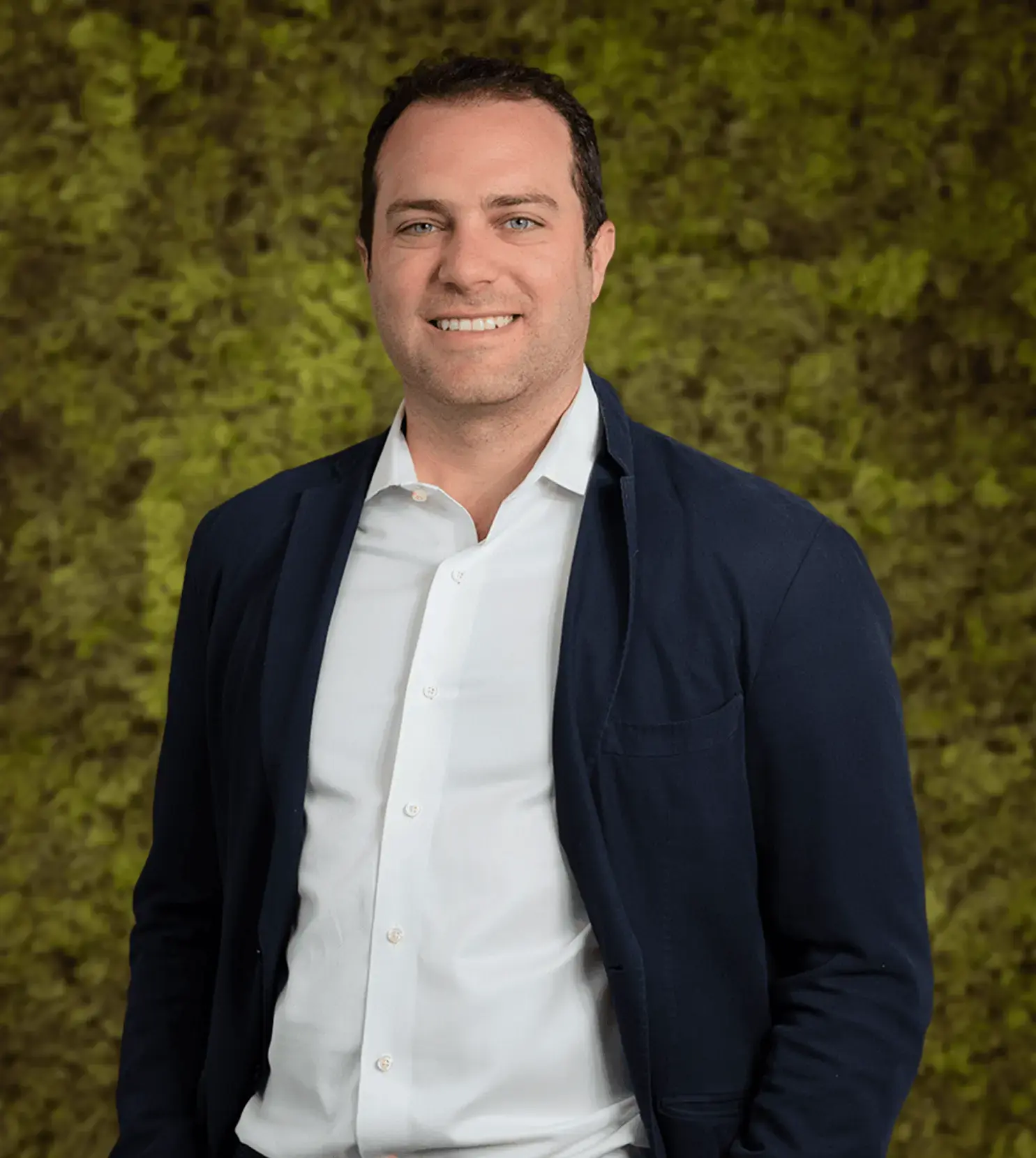
Master’s degree in Environmental and Territorial Engineering, specialising in Environmental Remediation Technologies, from the Politecnico di Milano; qualified as a professional engineer, with a view to enhancing managerial and professional skills in current sustainability issues. Executive Master’s degree in Circular Economy Management from LUISS Business School. Specialises in sustainability, optimising waste management and treatment, and the principles and application of Green and Circular Economy in specific sector-based projects and within individual companies. Head of training on sustainability and the circular economy, with specific teaching roles on professional Master’s programmes at the Catholic University of Milan, 24Ore Business School and directly within companies through bespoke training programmes.
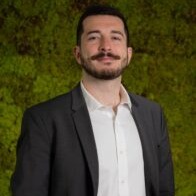
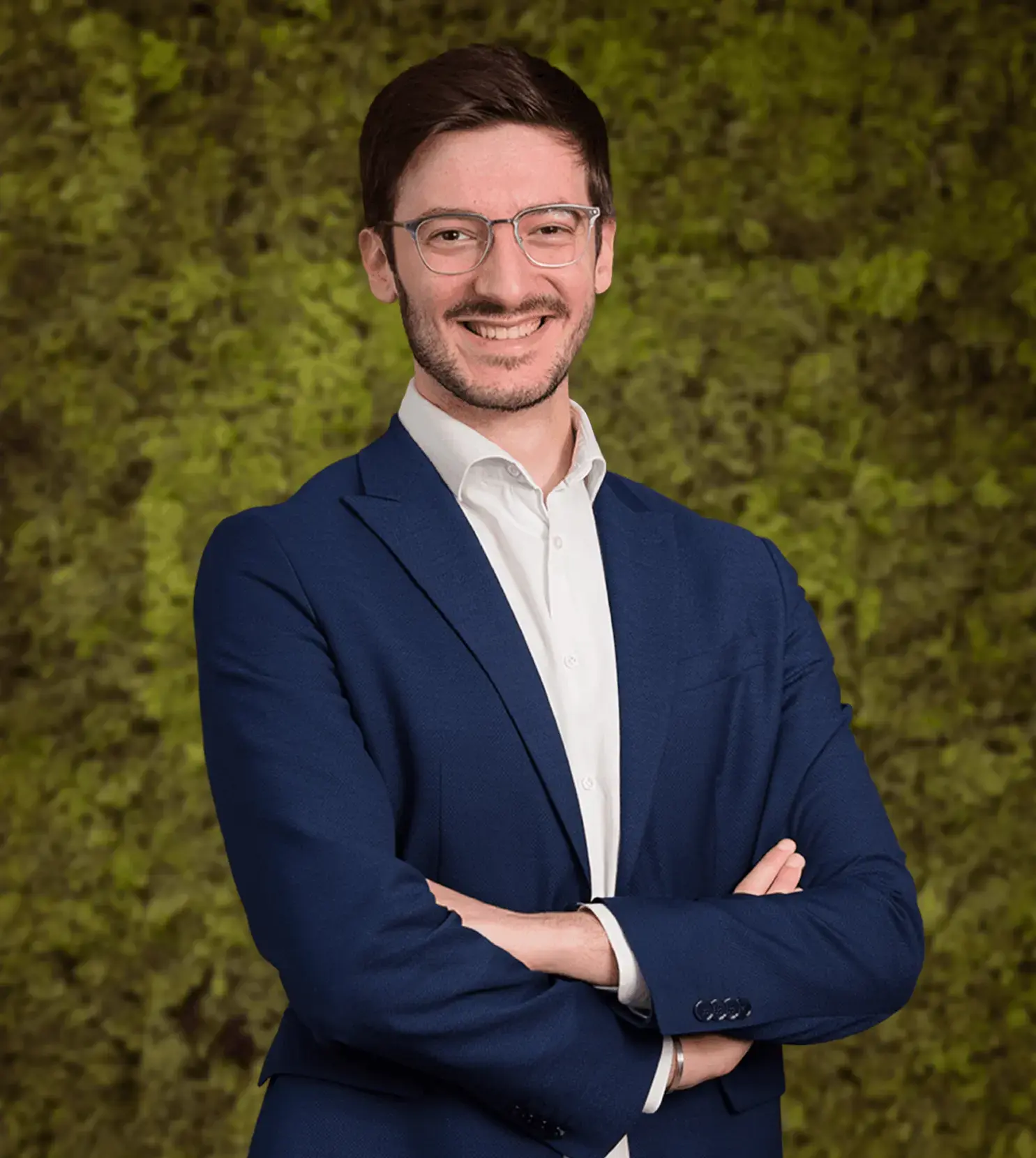
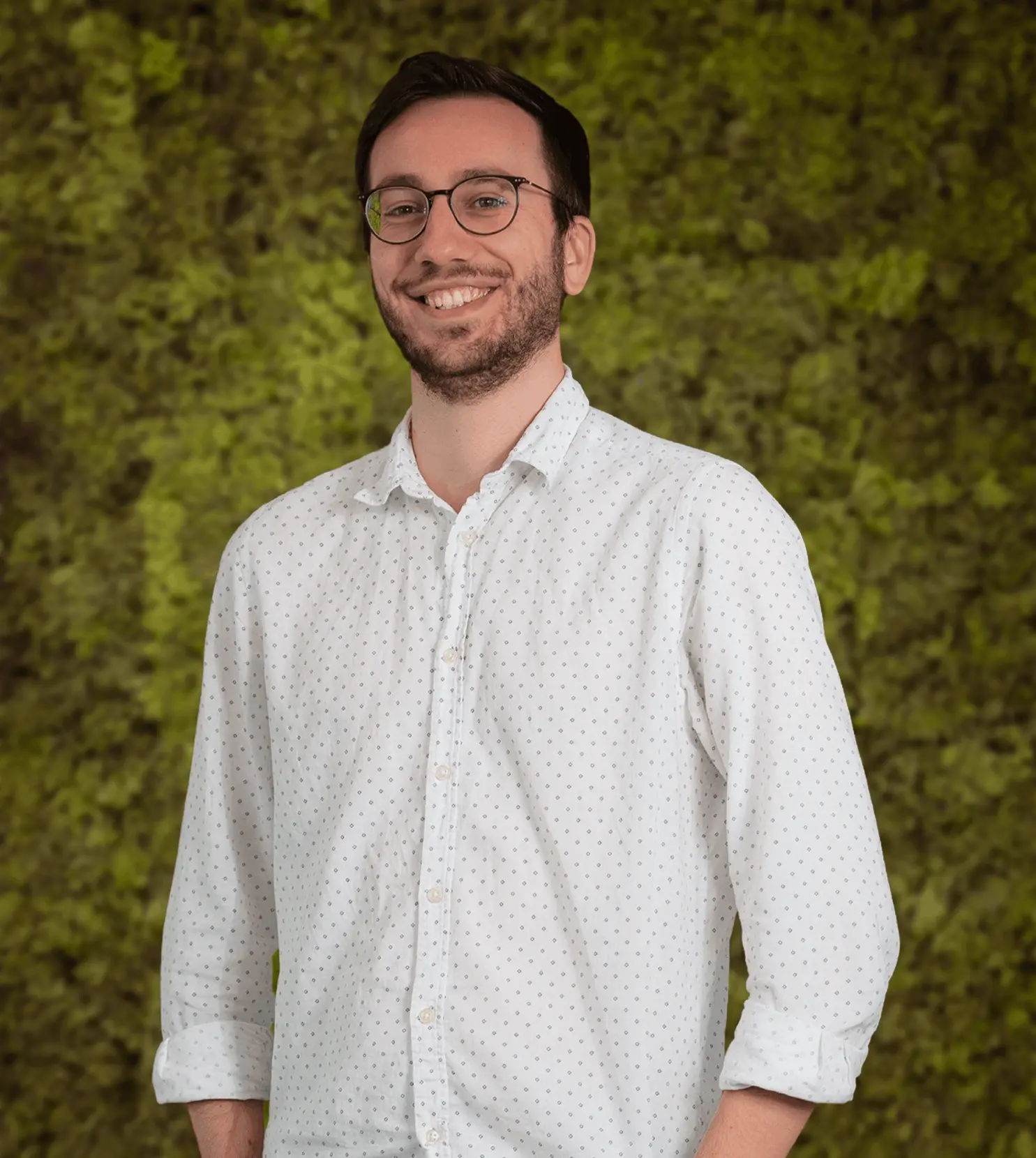
Having always been keenly interested in sustainability issues and eager to contribute actively to them, he began his professional career as a member of Circularity’s technical team, working as a Sustainability & Carbon Footprint Specialist.
He specialises in the analysis of environmental data within the context of sustainability reporting projects and in conducting carbon footprint studies. Finally, he delivers training courses on sustainability and the circular economy, both as part of professional Master’s programmes at the 24Ore Business School and the Catholic University, and directly to companies through dedicated training programmes.
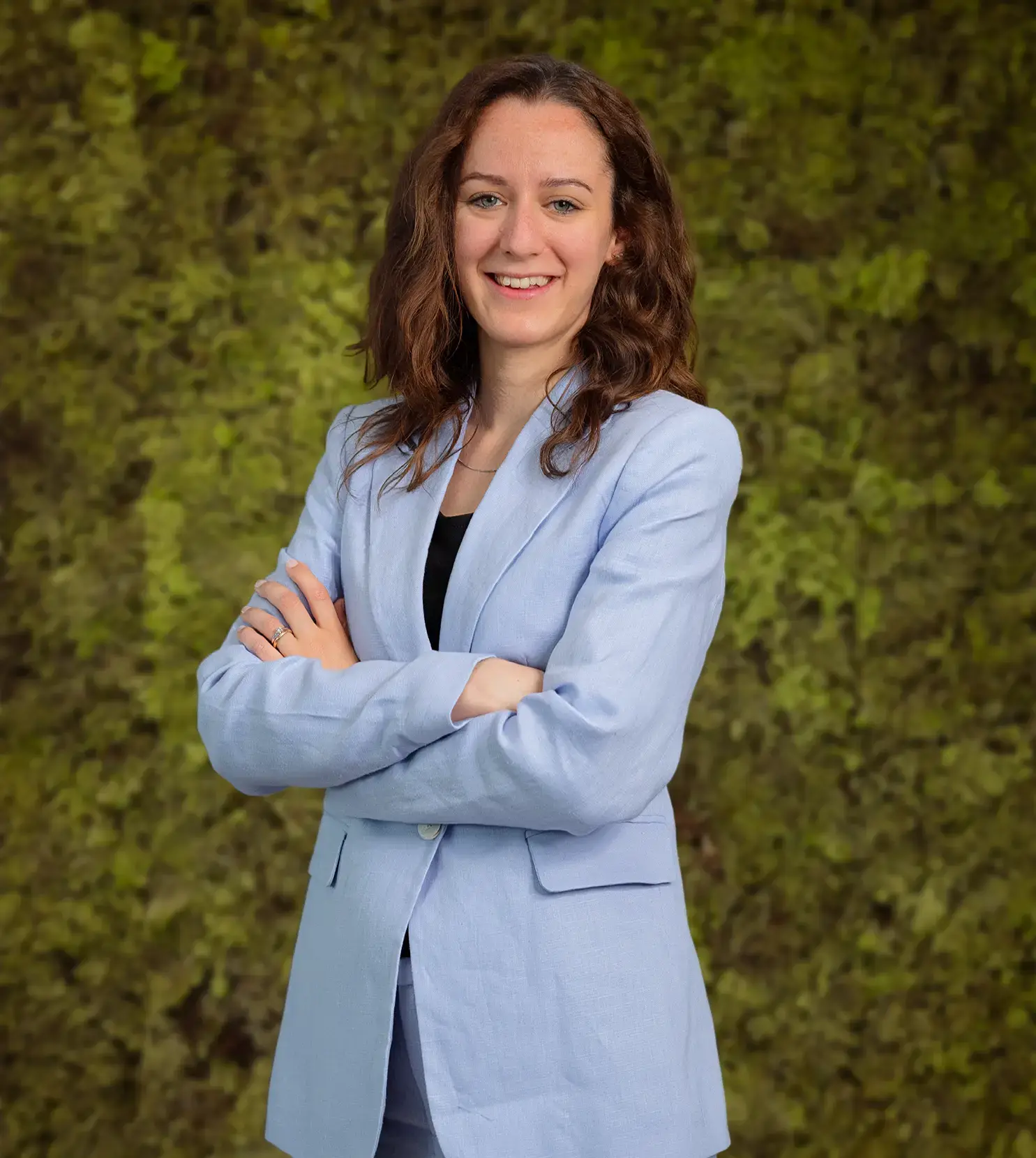
By integrating scientific knowledge, corporate sustainability and digital innovations, she specialises in projects aimed at optimising the use of corporate materials to improve environmental and supply chain KPIs, through Materials Management and Circular Supply Chain services, and in managing the functionality of the Circularity Platform. She is dedicated to corporate training for the implementation of sustainability strategies and performance improvement through the effective use of the Circularity Platform.