Skip to content
  • Circularity platform
  • Solutions
    Our services
    Sectors
    Segments
  • Courses
  • Information
  • Case History
ITA | ENG
Courses / Carbon Footprint Measurement
Carbon Footprint Measurement

Carbon Footprint Measurement

€ 747

VAT included

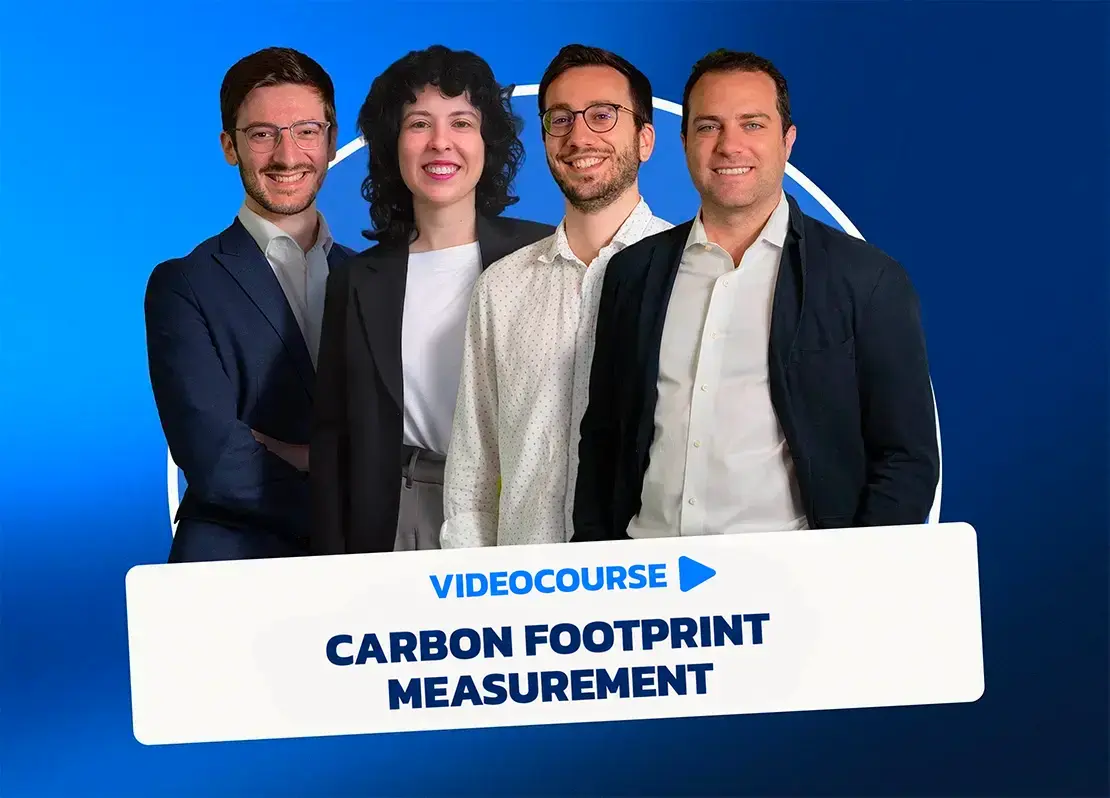
The “Carbon Footprint Measurement” course trains professionals interested in measuring, reducing and managing CO₂ emissions within their organisations.

Level intensive
19h of video
6 Modules

Carbon Footprint Measurement

Carbon Footprint Measurement

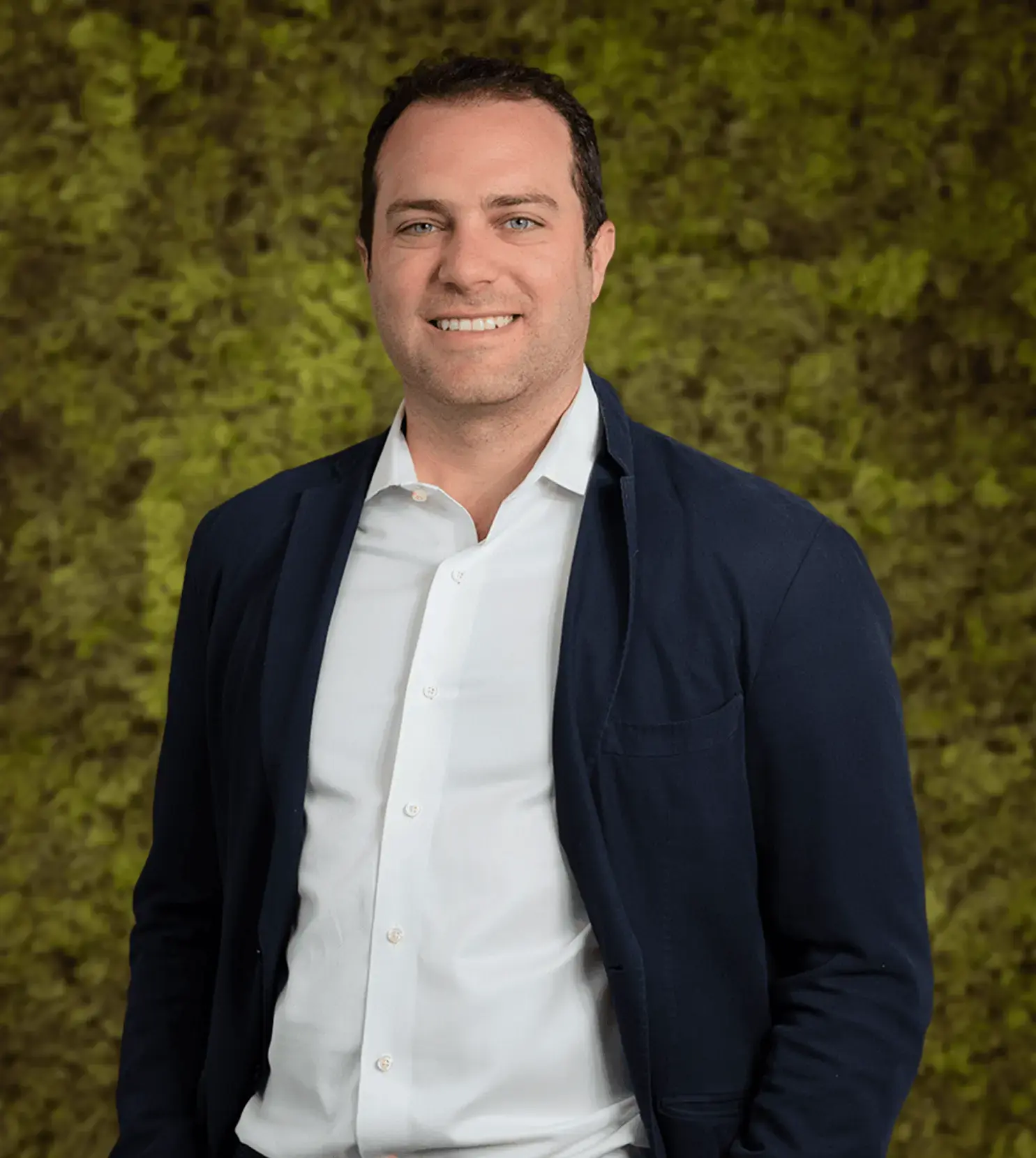
Alberto Pizzocchero
Teachers: Alberto Pizzocchero

The “Carbon Footprint Measurement” course trains professionals interested in measuring, reducing and managing CO₂ emissions within their company. It provides operational tools to develop decarbonization plans, support Net Zero strategies and integrate climate sustainability into corporate governance. A practical pathway to tackle the ecological transition in a concrete and measurable way.

The training program is designed for Project Managers with existing experience in the circular economy and sustainability sectors, as well as for recent graduates who want to acquire concrete knowledge and tools on circularity.


  • The course is divided into 6 video-recorded modules available via streaming on the Circularity Platform.

  • The entire course or individual modules can be purchased by credit card or bank transfer and watched in streaming on our platform.

  • Once purchased, they are valid for 30 days.

  • At the end of each module, you can take a quiz to test your learning level.

  • At the end of the course, a personal certificate of participation will be issued.

  • The course price is to be considered VAT included.

moduli-video
6 video-recorded modules available via streaming
pagamenti

Purchase by credit card or bank transfer

durata-corso
Content is available for 100 days
quiz-verifica

Assessment quiz available at the end of the course

certificato-frequenza
Personal certificate of attendance at the end of the course
video placeholder

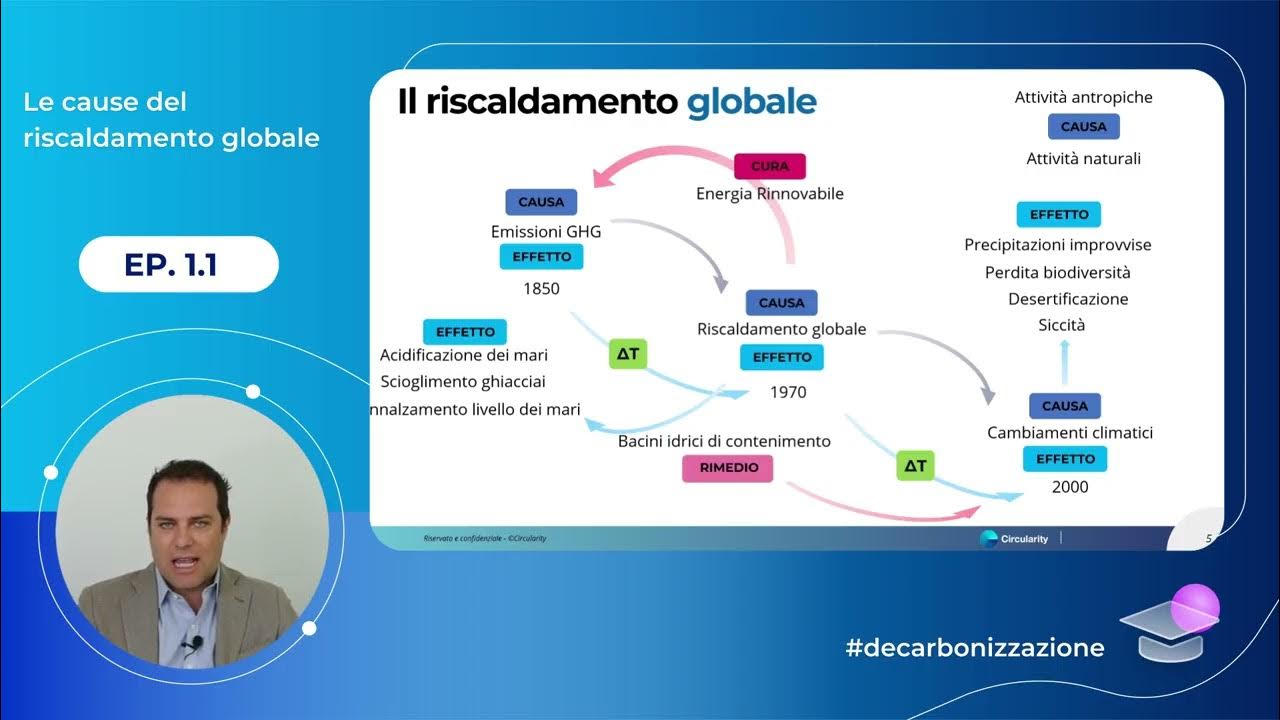
Watch a free preview of the first video of Module 1

“The causes of global warming”

Modules

The course contents:

“Carbon Footprint Measurement”

1.1 The causes of global warming
Global warming is mainly caused by human activities, particularly the use of fossil fuels. These activities release large amounts of greenhouse gases into the atmosphere. Deforestation and intensive agriculture further contribute to the accumulation of CO₂ and methane. Industrialization has accelerated climate change, altering natural balances.

1.2 Climate-altering gas emissions
Climate-altering gases include CO₂, methane, nitrous oxide and fluorinated gases. These gases trap heat in the atmosphere, raising the Earth's temperature. The main sources are transport, industry, agriculture and energy production. Measuring and reducing these emissions is central to the fight against climate change.

1.3 The greenhouse effect and global warming
The greenhouse effect is a natural phenomenon that allows the Earth to maintain a temperature compatible with life. However, the excess of greenhouse gases amplifies this effect, causing an abnormal warming of the planet. This imbalance alters the global climate and influences natural and human systems. Acting on the origin of emissions is essential to contain the phenomenon.

1.4 Extreme effects of global warming
Global warming intensifies extreme weather events such as heat waves, floods, fires and droughts. Glacier melting and rising sea levels threaten ecosystems and coastal communities. Biodiversity is at risk and food insecurity is growing. The consequences extend to health, economy and human migrations.

2.1 Weather vs. Climate
Weather describes atmospheric conditions over a short period and within a limited area (e.g. rain, sun, wind). Climate, on the other hand, represents the average of these conditions over long periods (30 years or more). Confusing the two concepts leads to incorrect interpretations of climate change. Understanding the distinction is fundamental for analyzing climate trends.

2.2 What is climate change
Climate change is the lasting alteration of global or local climate parameters. It is mainly caused by anthropogenic activities, which increase the concentration of greenhouse gases. It manifests itself through higher temperatures, changes in precipitation patterns and extreme phenomena. It is an environmental, economic and social emergency on a global scale.

2.3 Future climate scenarios
Climate scenarios are based on model projections that hypothesize different levels of future emissions. Depending on the actions taken today, warming can be contained or worsen drastically. Scenarios help governments, companies and communities plan response strategies. The IPCC provides the main reference models, such as the SSPs (Shared Socioeconomic Pathways).

2.4 Mitigation and Adaptation to climate change
Mitigation aims to reduce the causes of climate change, limiting greenhouse gas emissions. Adaptation focuses instead on dealing with the impacts already underway, modifying infrastructure, agriculture and resource management. Both strategies are complementary and necessary. The Carbon Manager plays a key role in their application at the corporate level.

3.1 History and Origin of climate awareness
Attention to climate change emerged in the 20th century with the first scientific observations on the increase of CO₂. In the 1970s and 1980s, awareness grew thanks to studies on the greenhouse effect and global warming. The 1992 Rio Conference marked an international political turning point. Since then, climate and sustainability have been at the center of the global environmental debate.

3.2 The COPs in history
The COPs (Conference of the Parties) are annual UN conferences on climate change, started in 1995. They have led to fundamental milestones such as Kyoto (COP3), Copenhagen (COP15) and Paris (COP21). Each COP is a crucial moment of negotiation between governments, experts and civil society. The decisions made guide climate policies worldwide.

3.3 The IPCC and its reports
The IPCC (Intergovernmental Panel on Climate Change) is the main international scientific body on climate. Its reports objectively assess the scientific data available on climate change. IPCC documents are fundamental for guiding political decisions and defining future scenarios. Each report cycle updates the global community on the urgency of climate action.

3.4 Climate strategies and regulations
Global strategies are based on multilateral agreements to reduce emissions and increase climate resilience. The Kyoto Protocol (1997) and the Paris Agreement (2015) are two fundamental pillars. Countries define voluntary contributions (NDCs) for decarbonization. International cooperation is essential to address a global problem such as climate.

4.1 LCA, Life Cycle Assessment, theory and definitions
The Life Cycle Assessment is a scientific methodology for evaluating the environmental impacts of a product or process throughout its entire life cycle. It starts from the extraction of resources up to disposal (“from cradle to grave”). It is standardized by ISO standards (14040-44) and is fundamental for corporate sustainability. It enables informed decisions on ecodesign, procurement and climate strategies.

4.2 Defining objectives
The LCA calculation is developed in four main phases. Objectives, the functional unit and system boundaries are defined (what is included in the analysis). Data is collected in the Life Cycle Inventory (LCI), and the environmental impact is evaluated (LCIA). Finally, the results are interpreted to guide sustainable choices and communicate transparently.

4.3 Defining the scope of analysis
The Life Cycle Inventory (LCI) collects all input and output data associated with the processes of the analyzed system. It includes energy, materials, transport, emissions and waste. The quality and representativeness of the data directly influence the reliability of the analysis. The LCI is the quantitative basis on which every LCA evaluation is founded.

4.4 Inventory analysis
The Life Cycle Impact Assessment (LCIA) translates environmental flows into impact categories (e.g. climate change, acidification, land use). Each input/output is associated with a potential impact using standard models. The result makes it possible to compare solutions and identify “hot spots”. It is a decision-making tool to reduce the environmental footprint.

4.5 Impact analysis
LCA (Life Cycle Assessment) evaluates environmental impacts, LCC (Life Cycle Costing) analyzes economic costs throughout the life cycle. LCS (Life Cycle Sustainability) integrates LCA and LCC by adding social impact, for a holistic view of sustainability. Together, they offer a complete framework for strategic decisions and responsible design.

4.6 Interpretation and communication of results
The results of the LCA analysis must be interpreted and communicated correctly. Representing information in a precise, graphic and communicative way makes it possible to increase the understandability of the analysis, allowing easier evaluation.

5.1 Defining boundaries
Defining boundaries is the first step to building a solid and consistent emissions inventory. A distinction is made between organizational boundaries (operational control, financial control, equity share) and operational boundaries (Scope 1, 2 and 3). The choice deeply influences the perimeter of reported emissions. A correct setup ensures comparability, transparency and compliance with standards (GHG Protocol, ISO 14064).

5.2 Emissions calculation
Emissions calculation is based on the use of emission factors applied to activity data (e.g. gas, fuel, electricity consumption). Scope 1 includes direct emissions from controlled sources; Scope 2 indirect emissions from purchased energy; Scope 3 all other indirect emissions along the value chain. Recognized databases and calculation tools are used (e.g. DEFRA, ISPRA, GHG Protocol). An accurate estimate makes it possible to monitor performance and define effective decarbonization strategies.

6.1 The decarbonization plan
It is a structured strategy to progressively reduce greenhouse gas emissions. It includes operational, technological and management measures to lower environmental impact. It is based on the analysis of current emissions and the definition of time-based targets. It is fundamental for aligning the company with international climate objectives.

6.2 Scenario analysis
It consists in evaluating different possible futures linked to economic, technological and regulatory variables on climate. It helps companies understand the risks and opportunities of the ecological transition. It supports strategic planning and business resilience. It is often integrated into climate plans according to the TCFD framework.

6.3 Carbon Pricing
It is a system that assigns a cost to CO₂ emissions to incentivize the reduction of environmental impact. It can be implemented through carbon taxes or emissions trading systems (ETS). It makes reducing emissions economically advantageous. It promotes the transition towards low-emission production models.

6.4 Science Based Targets
They are emission reduction targets aligned with climate science and the Paris Agreement. They allow companies to set credible and measurable commitments. They require compliance with thresholds compatible with containing global warming. They are validated by the SBTi initiative, recognized internationally.

6.5 Carbon neutrality according to ISO 14068
It is an international standard that defines rigorous criteria for declaring carbon neutrality. It includes the quantification of emissions, their reduction and the offsetting of residual emissions. It ensures transparency, traceability and verifiability of results. It makes corporate claims compliant and credible in the eyes of the market.

6.6 Carbon credits
They are certificates that attest to the reduction or removal of one tonne of CO₂ equivalent. They can be purchased to offset emissions that cannot be reduced. They must meet criteria of additionality, traceability and permanence. They are a useful tool, but not a substitute, for internal decarbonization actions.

Teachers

Our teachers

Alberto Pizzocchero
Alberto Pizzocchero
Circular economy Project Manager

Master’s degree in Environmental and Territorial Engineering, specialising in Environmental Remediation Technologies, from the Politecnico di Milano; qualified as a professional engineer, with a view to enhancing managerial and professional skills in current sustainability issues. Executive Master’s degree in Circular Economy Management from LUISS Business School. Specialises in sustainability, optimising waste management and treatment, and the principles and application of Green and Circular Economy in specific sector-based projects and within individual companies. Head of training on sustainability and the circular economy, with specific teaching roles on professional Master’s programmes at the Catholic University of Milan, 24Ore Business School and directly within companies through bespoke training programmes.


Start the training

Go to the course