
For us, sustainability isn't a communication attribute: it's the way we've chosen to do business from day one. Being a Benefit Corporation means we have written into our bylaws the commitment to generate value for the community, not only for investors, and to report on it transparently every year.
On this page you'll find the pillars that define our approach: the legal form that binds us to impact objectives, the Goals of the 2030 Agenda we concretely contribute to, and the quality management system that certifies how we work.
Benefit Corporation
Since its founding, Circularity has voluntarily adopted the status of Benefit Corporation, a choice that strengthens and makes legally binding its commitment to improving the environmental and social context in which it operates.
As a Benefit Corporation, Circularity pursues, in addition to profit, purposes of common benefit in the conduct of its business. Common benefit means the pursuit of one or more positive effects on:
-
people, communities and territories
-
the environment and natural resources
-
cultural and social assets and activities
-
entities, associations and other stakeholders
This commitment is undertaken and pursued in a responsible, sustainable and transparent way, with verifiable annual reporting.
The Impact Report
Every year Circularity publishes an Impact Report, a mandatory attachment to the financial statements, which complements financial data with non-financial information related to the common benefit purposes included in its bylaws.
For the quantitative measurement of impact, Circularity has chosen the B Impact Assessment as its reference protocol: an international standard that evaluates environmental, social and governance performance in a comparable and rigorous way.
Our approach to corporate responsibility
Corporate Social Responsibility (CSR) is the choice of those who want to combine the creation of economic value with value for the community and the environment. At Circularity, we have built our business model around the paradigm of "shared value": profit and positive impact are not in tension, they reinforce each other.
Ours is not a statement of intent: every day we work to help clients, suppliers and collaborators grow in their awareness of sustainable development, contributing to the achievement of the Sustainable Development Goals (SDGs) of the United Nations 2030 Agenda.
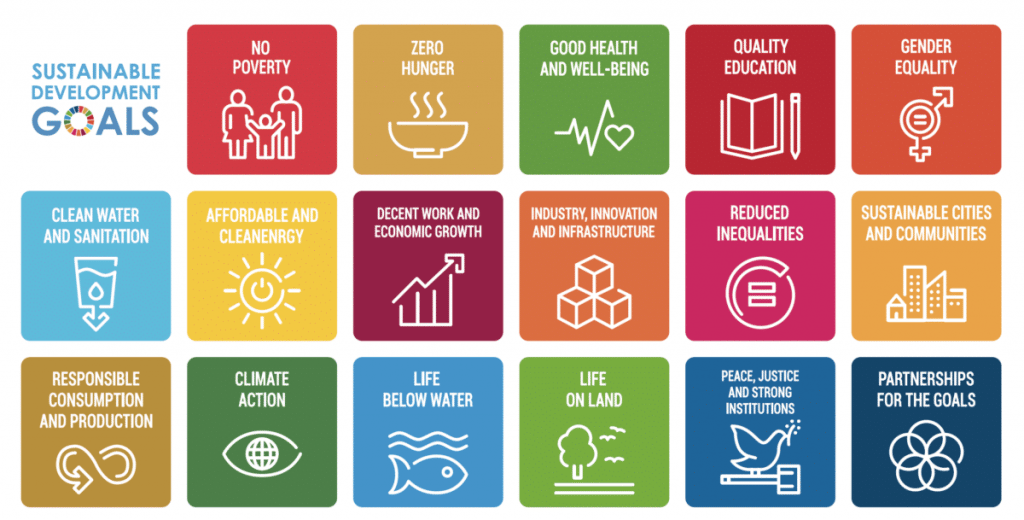
Circularity's Goals
SDG 4, Quality Education
We contribute to this goal through internal and external training programs: on one hand by developing training plans on sustainability (human rights, transparency, sustainable work models); on the other by applying a human resources management model that fosters continuous learning and skill development. Human capital is Circularity's most important resource: we create the conditions for those who work with us to express their full potential.
SDG 9, Innovation and Infrastructure
Innovation is at the heart of our model. We have developed a digital platform to enable virtuous paths of industrial symbiosis and promote innovators in the field of circularity. New technologies with a circular perspective accelerate the integration of sustainability into companies' economic strategies and business models.
SDG 12, Responsible Consumption and Production
Circularity's core business is supporting organizations on the path toward conscious use of resources. We promote the recovery, recycling and reuse of materials, optimizing the use of virgin raw materials and reducing waste, contributing directly and indirectly to the achievement of this goal.
SDG 13, Climate Action
Climate change is one of the central challenges of sustainable development. By integrating this commitment into its corporate purpose, Circularity concretely supports companies in measuring and reducing their environmental impact, with the aim of guiding them toward Carbon Neutrality.
Certified quality: ISO 9001:2015
Since its inception, Circularity has invested in designing and continuously improving its Quality Management System.
In October 2021, it successfully completed the first certification process, obtaining the ISO 9001:2015 certificate, which has been renewed regularly every year. The certification body RINA has attested the system's compliance with the requirements of the standard for the following areas of application:
-
design and delivery of information, training and action services in the field of sustainability and the circular economy
-
design and delivery of consulting services for the management of waste, end of waste, by-products and environmental sustainability consulting
The certification attests that Circularity's activities meet the minimum requirements of the ISO 9001 standard, that the services provided comply with the specifications indicated, and that all the preparatory phases for their implementation are traceable and verifiable.
Holding the certification contributes to improving brand reputation, qualitative performance and client relationships, in line with the quality policy adopted by Circularity.